

Psst.. This newsletter is getting a new brand. I will be writing more about frontier tech, innovation, and the philosophical discussions surrounding them.
Recently, there has been significant anxiety about data centers, AI, and electricity demand. The fear is understandable: new data centers use enormous amounts of power, and in some local markets, they can put real pressure on grids, prices, water use, and land. But the conclusion many people jump to - that we should solve the problem by using less energy or stopping new demand - gets the problem backward.
The real problem is not that society wants too much energy. The real problem is that we still produce too much of it with dirty fuels, and we build clean electricity, transmission, and storage too slowly.
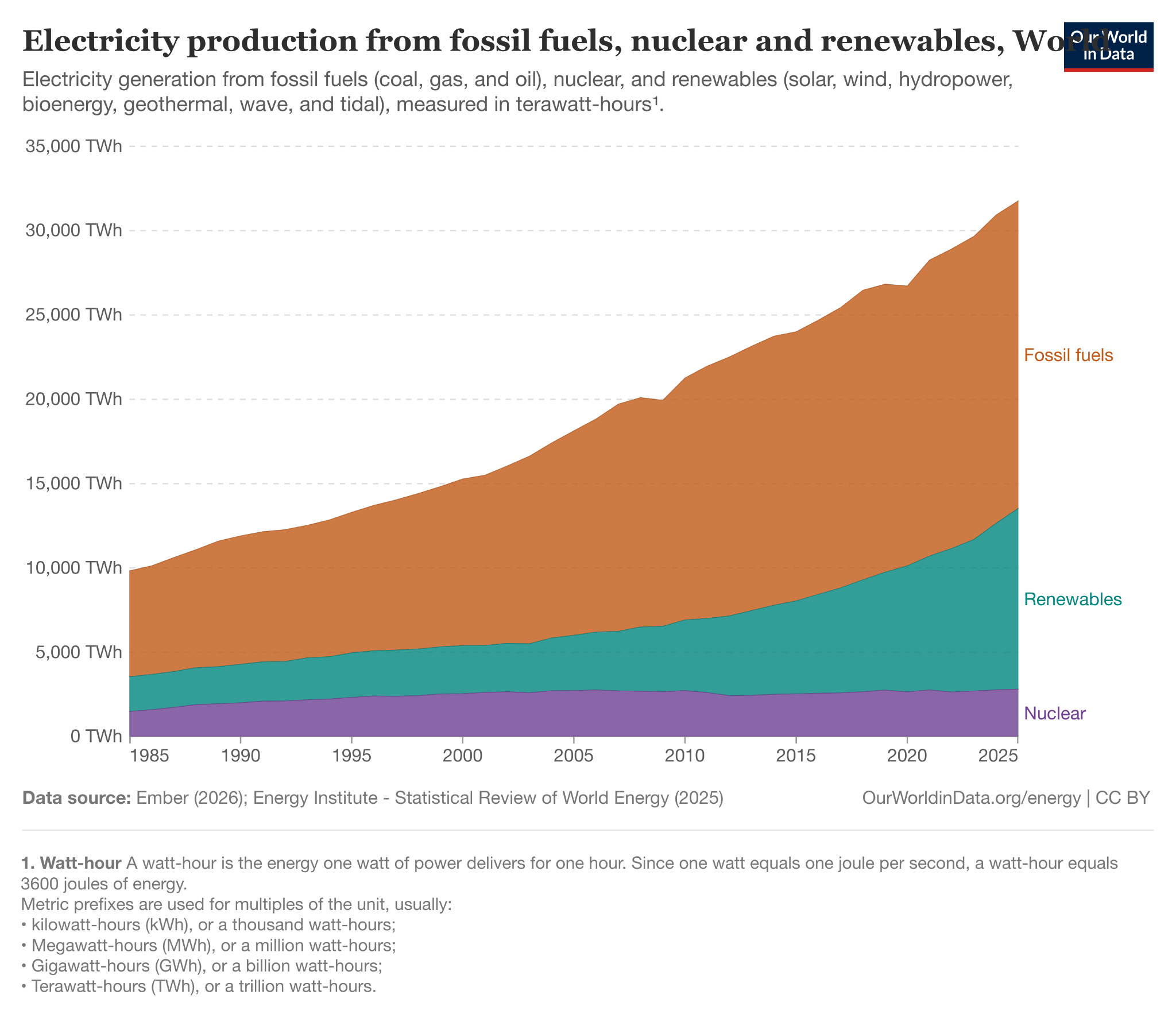
I grew up in Jaipur, India, where power cuts were part of summer life. When the electricity went out, you planned around it. You made sure water was stored, phones were charged, and the house could somehow get through hours without fans or coolers. That experience makes the current debate feel strange. People who have always had reliable electricity can talk about reducing demand as if energy is a luxury. For much of the world, reliable power is not a luxury. It is time, safety, education, health, and basic dignity.
That is still true globally. The World Bank’s 2025 Tracking SDG 7 report says global electricity access reached 92% in 2023, yet 666 million people still lacked access to electricity. That is not an argument for consuming less energy. It is an argument for producing far more clean, reliable, affordable energy.
So yes, data centers matter. The International Energy Agency’s 2025 Energy and AI report estimates that global electricity generation to supply data centers was about 460 TWh in 2024. In its base case, that grows to over 1,000 TWh in 2030 and about 1,300 TWh in 2035. AI is an important driver of that growth. In the United States, data centers are especially concentrated, meaning their local impact can be much larger than their global share would suggest.
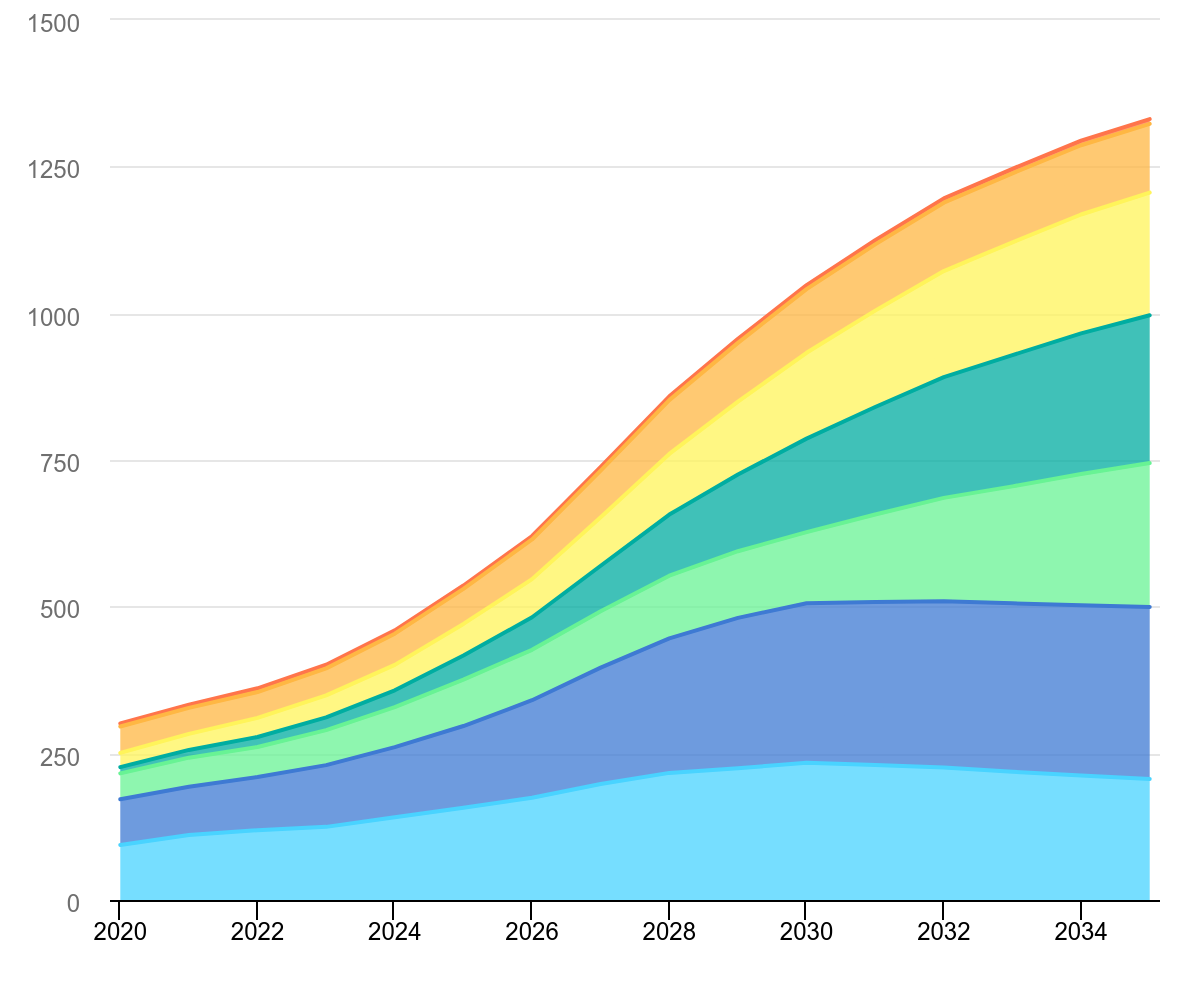
But this is exactly why the debate needs to be more precise. Data centers are a real grid-planning problem. They are not proof that energy abundance is bad. The IEA notes that even with rapid growth, data centers remain a relatively small part of the total power system, rising from about 1% of global electricity generation today to about 3% in 2030. If the response is simply “stop building data centers,” we are not solving the underlying constraint. We are admitting that our energy system cannot grow.
That is the scarcity mindset we should reject.
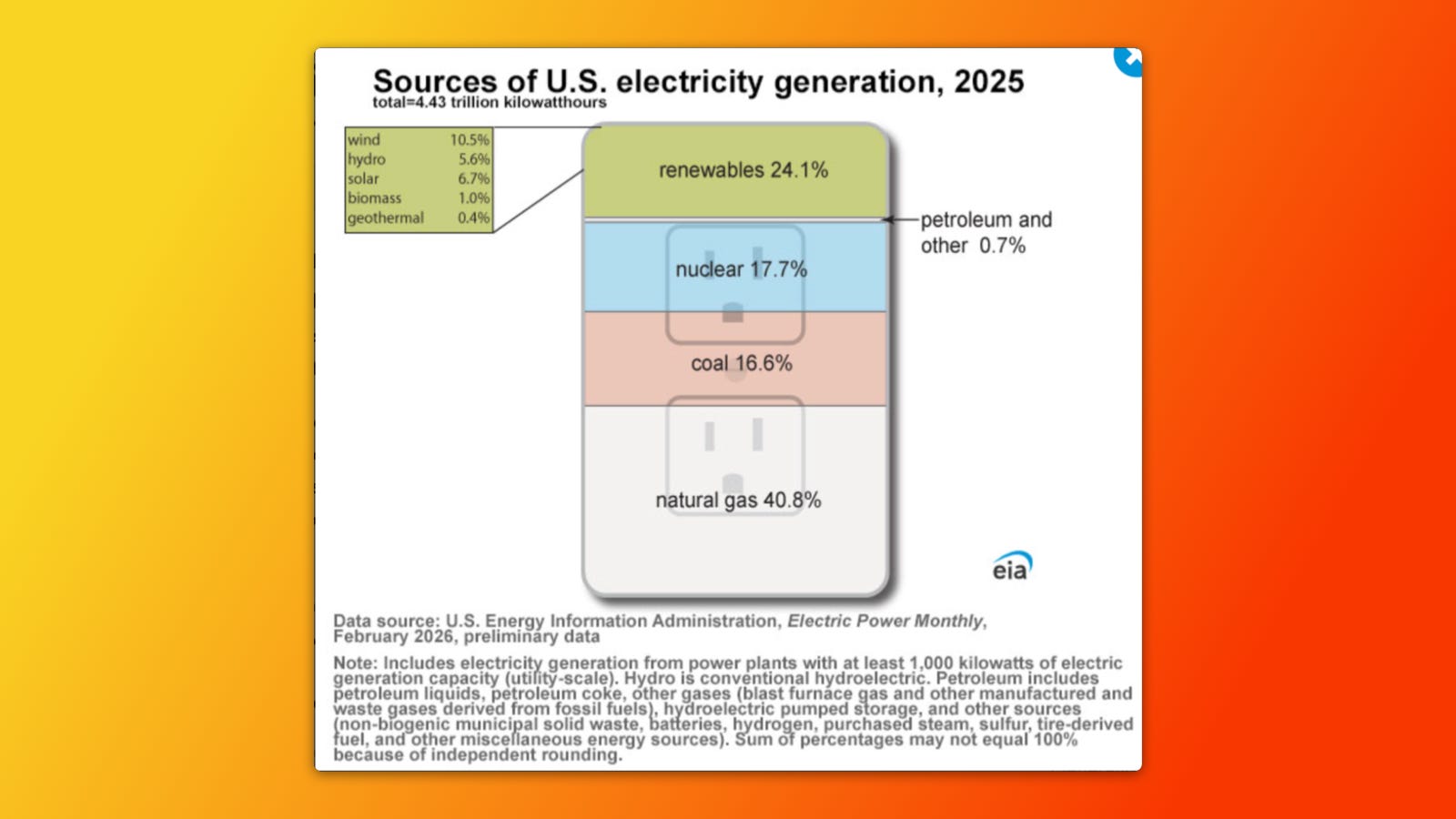
The climate problem is not electricity consumption itself. It is emissions. In the United States, EIA’s latest electricity mix shows that utility-scale generation in 2024 was still dominated by fossil fuels: natural gas supplied 43%, coal 15%, petroleum and other sources less than 1%, while renewables supplied 23% and nuclear supplied 18%. Globally, fossil fuel production and use also create methane emissions. IEA’s Global Methane Tracker 2025 and its 2000-2025 methane chart are the latest sources to use for this section. If new electricity demand is met by coal and gas, emissions rise. If it is met by clean generation, better grids, storage, nuclear, geothermal, hydro, demand response, and smarter siting, we can raise living standards while cutting pollution.
That is the case for energy abundance: not infinite consumption with no tradeoffs, but enough clean power that people do not have to choose between progress and the planet.
Some assumptions need to be debunked.
First, data centers are not the only, nor even the largest, source of growth in electricity demand. They are growing quickly and can overwhelm certain local grids, but globally, they are part of a much bigger electrification story that includes cooling, industry, transport, appliances, and economic development.
Second, using less energy is not automatically moral. For someone already living with abundant power, efficiency is a good thing. Waste is bad. But for people without reliable electricity, “less energy” means fewer fans in a heat wave, less refrigeration for food and medicine, less study time, less industrial capacity, and fewer ways to escape poverty. The goal should be less pollution per unit of useful work, not less human flourishing.
Third, clean energy is not unlimited in a simple or magical sense. Solar, wind, hydro, nuclear, geothermal, storage, and transmission all have real constraints: land, permitting, minerals, financing, supply chains, local opposition, reliability, and time. But those are engineering, policy, and coordination problems. They are not reasons to accept permanent scarcity. The IEA’s grid report is clear that grids risk becoming a bottleneck for clean energy transitions unless countries upgrade planning, investment, and regulation.
Fourth, the choice is not “AI or people.” The better question is: who pays for the infrastructure, where is the demand located, and what kind of power is built to serve it? Data center companies should not be allowed to socialize grid costs while privatizing the upside. They should bring additional clean power, fund grid upgrades, locate in areas with available capacity, use flexible demand where possible, and be accountable for local water and land impacts. That is a stronger position than simply saying “shut it down.”
The abundance argument is not that every data center is good. Some projects will be badly located, badly timed, or powered by the wrong mix. The argument is that fear of demand should not become an excuse for underbuilding the future. More people will need air conditioning as temperatures rise. More countries will industrialize. More transport and heating will be electrified. More computation will be used in science, medicine, logistics, education, manufacturing, and energy systems themselves.
If we respond to that world by rationing ambition, we will get a dirtier and more unequal future. If we respond by building clean power faster, we can get the opposite: higher living standards, lower emissions, and more resilience.
The answer is not to go back to a world of power cuts. The answer is to make reliable, clean electricity so abundant that nobody has to remember life without it.
Sources
World Bank, Tracking SDG 7 - The Energy Progress Report 2025: https://www.worldbank.org/en/topic/energy/publication/tracking-sdg-7-the-energy-progress-report-2025
International Energy Agency, Energy and AI, 2025: https://www.iea.org/reports/energy-and-ai
IEA, Energy supply for AI: https://www.iea.org/reports/energy-and-ai/energy-supply-for-ai
U.S. Energy Information Administration, Electricity in the U.S. 2024 generation mix: https://www.eia.gov/energy_in_brief/article/fuel_mix_for_elect_generation.cfm
U.S. Energy Information Administration, Electric Power Annual with 2024 data: https://www.eia.gov/electricity/annual/
Our World in Data, global electricity production by source: https://ourworldindata.org/grapher/global-electricity-production-by-source
Our World in Data, United States energy profile: https://ourworldindata.org/profile/energy/united-states
International Energy Agency, Electricity Grids and Secure Energy Transitions, 2023: https://www.iea.org/reports/electricity-grids-and-secure-energy-transitions
International Energy Agency, Global Methane Tracker 2025: https://www.iea.org/reports/global-methane-tracker-2025/understanding-methane-emissions
International Energy Agency, global methane emissions from fossil fuels by fuel and segment, 2000-2025: https://www.iea.org/data-and-statistics/charts/global-methane-emissions-from-fossil-fuels-by-fuel-and-segment-2000-2025